
Selling skills are not just a vocational requirement but an essential skill for everyday life. In essence, selling is persuasion, a practice that we engage in at an early stage of our lives and continue to do so through our earthly journey.

Selling skills are not just a vocational requirement but an essential skill for everyday life. In essence, selling is persuasion, a practice that we engage in at an early stage of our lives and continue to do so through our earthly journey.
“ Why around 80% CMO’s Don’t Make It. What It Takes To Get To The Top”.
The top marketing job in the company is a minefield where many talented executives have failed. While some of this is attributable to the ambiguity of the role itself, its also a function of how a CMO builds consensus among his / her other C-suite peers and looks at his / her department more in terms of the business impact it delivers and not merely a function relegated to marketing activities.

The core principle of Marketing comes from an intersection of science + art + human behaviour. As a lot of you will be starting or planning to accelerate your marketing careers, I am happy to share 5 essential skills that have helped me to be a successful marketer.
In 2008, I was at Microsoft looking after a territory in South India region. The 2008 financial crisis hit hard every business. Majority of business in South India was hit as it was not only impacted by India slowdown but also outsourcing business was hit because it was directly connected to US Economy. It was a tough period, we applied numerous strategies and some clearly proved to be very effective. Those learnings are very useful in the current times during this pandemic as well.
The existence of the human race, is a story of survival; in the midst the vagaries of our existence, we have innovated and we have evolved. The unexpected vicissitudes has always brought with itself lessons, which have caused a paradigm shift in behavior; be it our daily routine, our lifestyles, our choices and in the way we conduct the businesses of our life.” Keeping this dimension of change simple for a management undergraduate and limiting it to a business scenario, we need to open up a new chapter.
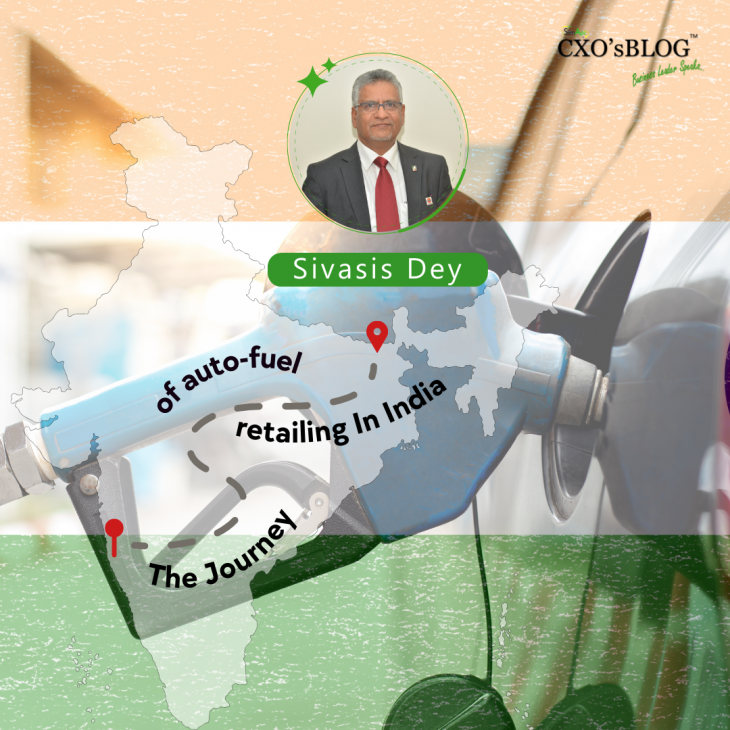
As a professional from the Energy Sector, I feel one of the sectors, which have undergone tremendous transformation in India, during the last couple of decades, is Auto-fuel retailing. From a regime of Administrative Price mechanism (APM) and from a mode of traditional distribution, it has slowly but steadily moved into an era of competition and marketing.
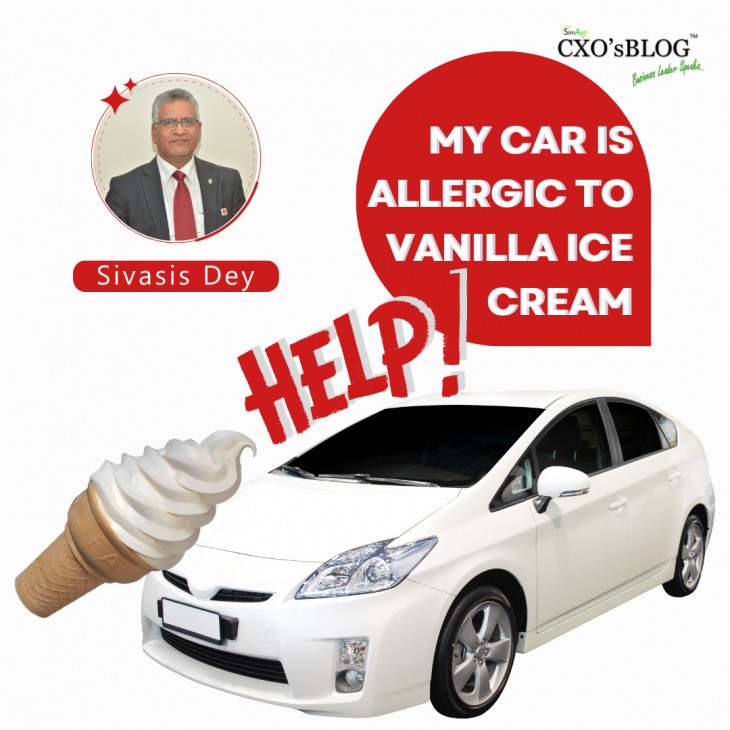
A complaint was received by a senior executive of a well known major Automobile manufacturer.
‘This is the second time I have written to you and I don’t blame you for not answering me because I kind of sounded crazy, but it is a fact that we have a tradition in our family of ice cream for dessert after dinner each night. But the kind of ice cream varied every night, as the whole family voted on which ice cream to have and I drive down to the store to get it.

Over the past few years, the automobile sector has been stuck in a quagmire, with floundering sales as a result of slowing economy.
The onset of the Covid-19 pandemic could result in vehicle sales plunging further and the recovery path will be slow.
Even as automakers try to tide over the crisis with virtual showrooms and contactless deliveries, there seems to be a growing concern with Economic factors impacting the automotive Industry as a whole across the World.
In the wake of the slowdown, the auto industry has been requesting the government for support through a viable tax structure in India, taxes for vehicles go as high as 28 percent. Then there are additional levies, mostly charged as a compensation cess that range between one percent and 22 percent, based on a car’s fuel type, length or engine size. A buyer will also have to pay road tax depending on the state of domicile, which could go up to almost 20 percent.

The COVID-19 pandemic began at a time of increasing global economic vulnerability. There were already genuine concerns of falling consumption levels and investment alongside rising unemployment. Brexit and the U.S-China trade war hadn’t helped and there was a palpable sense of uncertainty.
Most indicators now suggest that some of the largest economies stand on the precipice of the greatest real recession in nearly 100 years.
As far-fetched as it seems right now though, there will be a recovery and people are already asking: how different will the post-COVID-19 era be from the one we knew earlier? The most tangible effect we see is on technology adoption and general versatility with digital commerce and content. We anticipate a considerable acceleration on both fronts for individuals and businesses, which should hopefully do as much for financial inclusion and e-governance, as for streaming services.

Once upon a time, communications had distinct categories, most specifically internal and external, and it seemed never shall the twain meet. Back then, Internal comms was somewhat infra dig, a poorer cousin to external communications.